

The education and training industry has changed dramatically in recent years. Traditional classroom-based learning is no longer the only option for students. Today, learners expect flexibility, online access, interactive learning experiences, and digital resources that allow them to learn anytime and anywhere.
For training institutes, managing students, courses, exams, attendance, and certifications manually has become increasingly difficult. Spreadsheets, paper records, and disconnected communication methods often create confusion, reduce productivity, and affect student experiences.
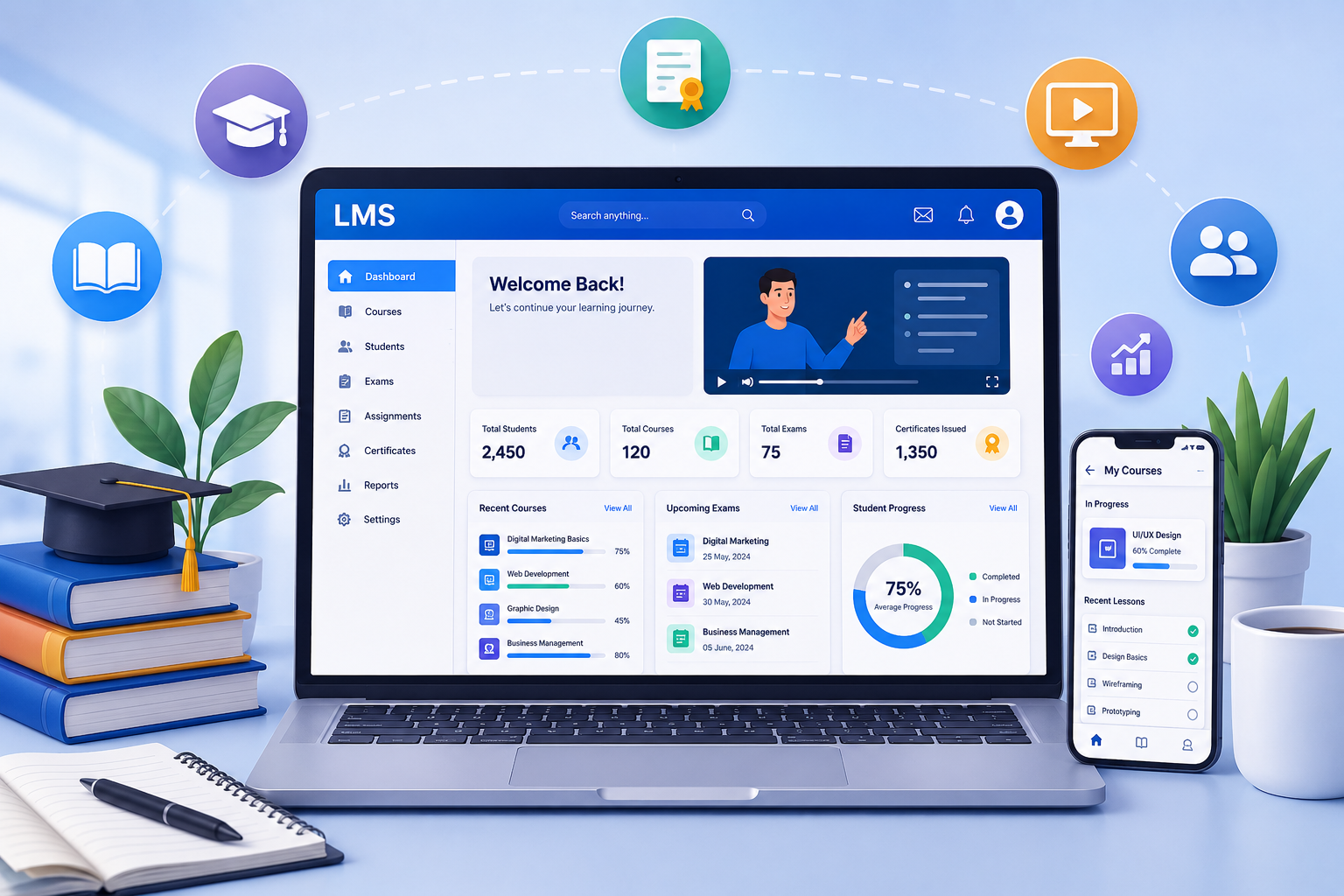
This is why more educational organisations are adopting a Learning Management System (LMS) to streamline operations and improve online learning experiences.
An LMS platform helps training institutes manage everything from one centralized digital system.
The Growing Challenges Faced by Training Institutes
As institutes expand and student enrollments increase, managing daily operations manually becomes overwhelming.
Common challenges include:
- Managing large student databases
- Handling course schedules manually
- Difficulty tracking student progress
- Complicated exam management
- Delays in certificate generation
- Poor communication with students
- Difficulty managing online learning content
Without a proper system, institutes may struggle to maintain organization and deliver quality learning experiences.
Why Traditional Management Methods No Longer Work
Many institutes still depend on manual administration methods. While these systems may work initially, they become inefficient as operations grow.
Problems with Manual Systems
1. Student Data Becomes Difficult to Manage
Maintaining student records manually often leads to:
- Duplicate entries
- Missing information
- Errors in attendance tracking
- Difficulty updating records
Managing student information efficiently becomes nearly impossible without automation.
2. Course Management Takes Too Much Time
Training institutes often offer multiple:
- Courses
- Batches
- Training programs
- Certification programs
Handling schedules and course materials manually creates unnecessary administrative work.
3. Exam & Assessment Management Is Complicated
Conducting exams manually creates challenges such as:
- Evaluation delays
- Record maintenance issues
- Difficulty tracking performance
- Increased paperwork
Institutes need digital solutions to simplify assessments and reporting.
4. Communication Gaps Affect Student Engagement
Without centralized communication systems, students may miss:
- Class updates
- Exam schedules
- Assignment deadlines
- Course announcements
Poor communication reduces student satisfaction and engagement.
What Is a Learning Management System?
A Learning Management System (LMS) is a digital platform designed to manage, deliver, and track educational content and training activities.
An LMS software helps institutes:
- Manage students
- Create online courses
- Conduct exams
- Track learning progress
- Issue certificates
- Improve communication
Everything can be managed from one centralized dashboard.
Key Features of an LMS Platform
Student Management System
An LMS helps institutes maintain organized student records.
Features include:
- Student registration
- Profile management
- Attendance tracking
- Batch allocation
- Student performance monitoring
A centralized student management system improves organization and reduces manual work.
Online Course Platform
Modern students expect online learning flexibility.
An LMS platform allows institutes to:
- Upload video lessons
- Share PDFs and study materials
- Create assignments
- Organize lessons by modules
- Conduct virtual learning sessions
An online course platform makes learning accessible anytime and anywhere.
Exam & Assessment Management
Digital exam systems simplify evaluation processes.
Features include:
- Online exams
- Quiz creation
- Automated grading
- Result management
- Performance analytics
This reduces paperwork and improves assessment efficiency.
Certificate Management
Generating certificates manually consumes time and resources.
An LMS software allows institutes to:
- Generate digital certificates
- Automate certification processes
- Verify student completion
- Maintain certificate records
Automated certificates improve professionalism and save administrative effort.
Course Progress Tracking
Training institutes can monitor:
- Student progress
- Course completion rates
- Assignment submissions
- Learning performance
This helps educators identify learning gaps and improve student outcomes.
Benefits of Using an LMS Platform
Simplifies Institute Management
An eLearning management system centralizes operations and reduces administrative complexity.
Saves Time & Improves Productivity
Automation minimizes repetitive tasks such as:
- Attendance tracking
- Exam management
- Certificate generation
- Student communication
This allows educators to focus more on teaching quality.
Improves Student Experience
Students can:
- Access courses online
- Track progress
- Download study materials
- Attend virtual sessions
- Receive updates instantly
A better learning experience improves student satisfaction.
Supports Online & Hybrid Learning
An LMS platform supports:
- Classroom learning
- Online learning
- Hybrid education models
This flexibility helps institutes reach more students.
Enhances Communication
Centralized communication tools improve coordination between:
- Students
- Trainers
- Administrators
Important updates can be shared instantly.
Why LMS Platforms Are Important for Modern Education
The demand for online education continues to grow rapidly. Students now prefer flexible learning environments that allow them to learn remotely and access educational content digitally.
Institutes without digital learning systems risk:
- Losing competitiveness
- Reducing student engagement
- Facing operational inefficiencies
A modern LMS software helps institutes stay updated with current education trends while improving operational performance.
Industries That Benefit from LMS Platforms
Learning management systems are useful for:
- Training institutes
- Coaching centers
- Educational academies
- Corporate training companies
- Online course creators
- Schools and colleges
- Skill development centers
Any organization involved in education or training can benefit from an LMS platform.
Essential Features Every LMS Should Have
When selecting an LMS platform, institutes should look for:
- Mobile responsiveness
- User-friendly dashboard
- Video course support
- Exam management tools
- Certificate generation
- Student analytics
- Secure login systems
- Multi-user access
- Notification systems
A feature-rich platform improves scalability and long-term usability.
Why Choose a Custom LMS Platform?
Every institute has unique operational requirements.
Custom LMS development allows organizations to:
- Add personalized features
- Improve branding
- Scale easily
- Integrate advanced tools
- Create better learning experiences
Custom solutions provide greater flexibility compared to generic platforms.
Final Thoughts
Managing a modern training institute manually is no longer practical. As student expectations and operational demands continue to grow, institutes need smart digital solutions that simplify learning management.